Sign illustrating the interesting flora of the waterfront. We saw the Plymouth Campion too, although it was in seed, but didn't have any luck with the Plymouth Thistle ( one to try for again next year perhaps)


Field Eryngo - Eryngium campestre
A few other plants photographed in the area which aren't rare at all were...

Black Nightshade - Solanum nigrum

Pellitory-of-the-wall - Parietaria officinalis


White Stonecrop - Sedum album
Then on to Slapton Lee famously Britain's only site for Strapwort. It's a tiny insignificant looking plant and very hard to spot until you 'get your eye in' but close up the flowers are quite pretty really.

That's it, there! Sprawling around in the centre of the photo.


Strapwort - Corrigiola litoralis

Common water-crowfoot - Ranunculus aquatilis

Keeled Skimmer - Orthetrum coerulescens
Then in early August a trip to Dartmoor to look for the rare Flax-leaved St John's wort which is a fussy plant and has very particular habitat requirements, explaining
its rarity and limited range. It needs plenty of space with few other
competitive plants nearby, and acidic soils in warm areas. Steep rocky
slopes exposed to the sun are ideal and there are quite a few sites like this on Dartmoor. The one we visited was near Castle Drogo.

The plant was growing on the tops of the rocky outcrop in this photo which was south facing and very warm and was a magnet for butterflies especially Wall Browns.

Wall Brown - Lasiommata megera
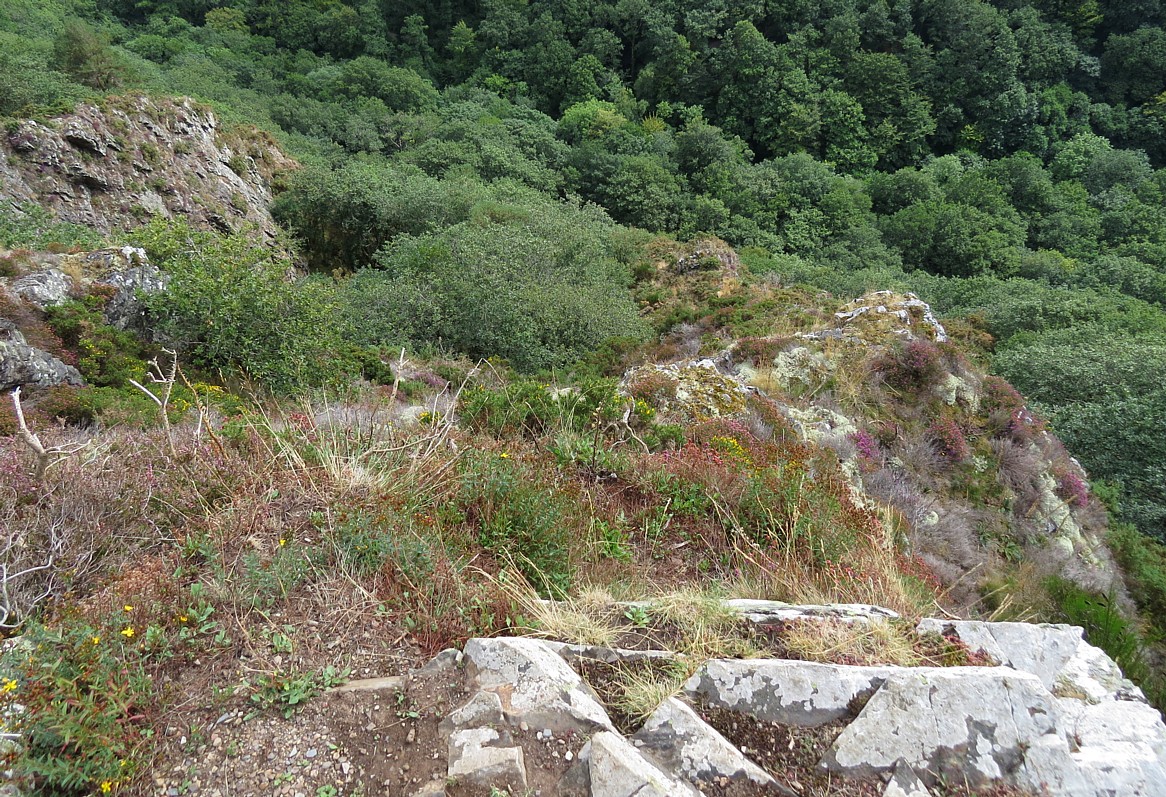
Closer view of the habitat. With Flax-leaved St John's wort plants in the left foreground.


On a background of Map Lichen - Rhizocarpon geographicum

Flax-leaved St John's wort - Hypericum linariifolium

The warm bare rocks and thin soils were also ideal for this lovely little plant

Sand Spurrey - Spergularia rubra
Then in late August a trip to Warleigh Point near Plymouth to see another rare Hypericum, this time Wavy-leaved St John's Wort a plant which favours damp waterlogged locations and is only found in Cornwall, and a couple of places in Devon and South Wales.

The wavy leaves unique to this species of St John's wort.


Wavy-leaved St John's Wort - Hypericum undulatum
And finally a local find was this striking white form of Herb Robert in Shute Woods.

Herb Robert - Geranium robertianum